
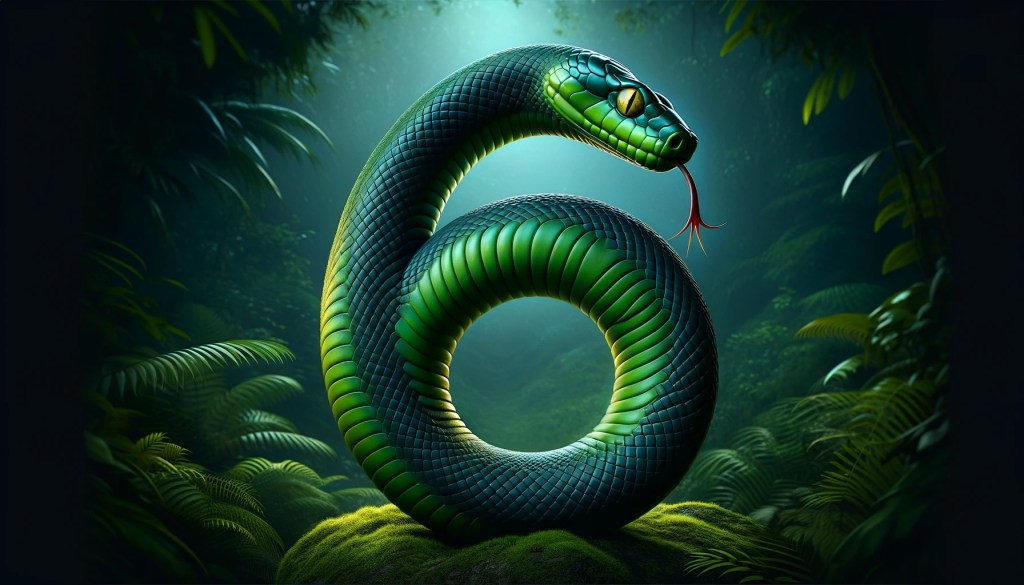
The number 6 holds significant symbolism across various spiritual, religious, and cultural contexts. The symbolism of the number 6 is multifaceted, encompassing notions of balance, creation, harmony, and imperfection across various spiritual, religious, and cultural traditions.
The Six-Pointed Star
- The Star of David: The Star or Shield of David, a six-pointed star, holds deep symbolic significance in Judaism. Its two interlocking triangles represent the harmonious union of opposing forces, such as heaven and earth, or masculine and feminine energies. Each triangle consists of three points, totaling six, symbolizing spiritual and material balance. Consequently, the Star of David embodies the divine harmony and completeness found within the number 6, reflecting the interconnectedness of the universe and the Jewish faith’s emphasis on balance and unity.
- The Philosopher’s Diamond: Found in alchemy, this symbol consists of two interlocking triangles, similar to the Star of David. These triangles represent the integration of opposites, such as fire and water or spirit and matter, striving towards spiritual enlightenment and transformation. The six points of the Philosopher’s Diamond, like the Star of David, symbolize harmony and balance, reflecting the alchemical quest for unity and the realization of the philosopher’s stone.
Biblical Symbolism: In Christianity, the number 6 is often associated with imperfection and incompleteness, as it falls short of the divine number 7, which represents perfection. The Book of Revelation mentions the “number of the beast” as 666, symbolizing the ultimate imperfection or evil.
- The Six Days of Creation: The six days of creation are a central narrative found in the Book of Genesis, the first book of the Bible, outlining the process by which God created the world.
- Day 1: Light and Darkness: God creates light and separates it from darkness, establishing day and night.
- Day 2: Sky and Water: God separates the waters to create the sky or firmament, dividing the waters above from the waters below.
- Day 3: Land, Sea, and Vegetation: God gathers the waters to create dry land, forming seas. He then commands the earth to bring forth vegetation, including plants, trees, and fruits.
- Day 4: Sun, Moon, and Stars: God creates the celestial bodies—the sun to rule the day, the moon to govern the night, and the stars—to mark the seasons, days, and years.
- Day 5: Birds and Sea Creatures: God fills the sky and seas with living creatures, including birds and sea creatures, blessing them to be fruitful and multiply.
- Day 6: Land Animals and Humans: God creates land animals, each according to its kind, and then creates humanity, male and female, in His image, giving them dominion over the earth and its creatures.
- On the seventh day, God rests, sanctifying it as a day of rest and reflection, known as the Sabbath. The narrative emphasizes God’s role as the Creator and the orderly progression of creation, culminating in the creation of humanity in God’s likeness.
Symbol of Harmony and Balance: In some spiritual traditions, 6 is seen as a symbol of harmony and balance. This is derived from its mathematical properties, as it is the sum of its divisors (1, 2, and 3) and is also the product of 2 and 3, two numbers often associated with dualities and creation.
Representation of Creation and Life: In numerology and various mystical traditions, 6 is linked with creation and the cycles of life. It’s often associated with fertility, growth, and nurturing, as seen in the hexagonal structures found in nature such as beehives and snowflakes.
Astrological Significance: In astrology, the number 6 is associated with the planet Venus, which symbolizes love, beauty, and harmony. This further reinforces its connection to relationships, creativity, and emotional balance.
Cultural and Historical Contexts: In many cultures, 6 is considered a lucky or auspicious number, representing blessings, prosperity, and protection. For example, in Chinese culture, the number 6 is associated with success and smoothness, while in ancient Mesopotamia, it was connected with divine protection.
Geometric Symbolism: From a geometric perspective, 6 is the first perfect number, as it is the sum of its proper divisors (1, 2, and 3). This mathematical perfection lends itself to symbolic interpretations of completeness and unity.
In Metaphysics
- Called the number of materiality, for it is symbolic of the union of spirit and matter
- The Serpent’s Coil:
- The number 6 is a line descending into a circle; symbolizing a serpent’s coil with the serpent returning upward to the power which was its source.
- Merkabah
- “Man consists of two interlaced triangles—the threefold spiritual body and the threefold form” (Hall)
In Science
- Six Senses


 zenstructions
Leave a comment