
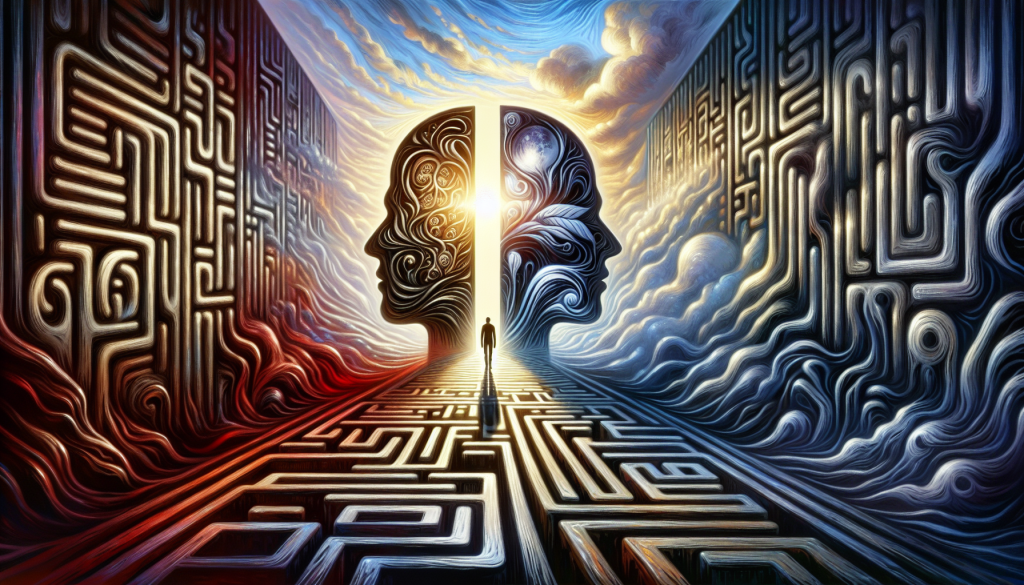
In the vast realm of human understanding, belief stands as a fundamental force shaping our perceptions, actions, and even our realities. Stephen King’s iconic novel “The Stand” offers a profound insight into the nature of belief with the following quote: “There’s no difference between believing in something that has no evidence, and choosing not to believe in something that has overwhelming evidence.” This statement encapsulates a complex interplay between evidence, belief, and the human psyche.
At first glance, the quote may seem paradoxical or even contradictory. After all, isn’t belief supposed to align with evidence? Shouldn’t rationality dictate our acceptance or rejection of ideas based on the available evidence? While this perspective holds true in many scientific and logical contexts, human belief often transcends the boundaries of empirical evidence.
The essence of the quote lies in recognizing the profound influence of subjective factors on belief formation. Human beings are not purely rational creatures; our beliefs are shaped by a myriad of cognitive, emotional, cultural, and societal influences. Sometimes, individuals may fervently believe in something despite lacking tangible evidence to support their stance. This phenomenon is not necessarily irrational but rather reflective of the intricate workings of the human mind.
Conversely, the quote highlights the phenomenon of cognitive dissonance, wherein individuals may choose to reject overwhelming evidence that contradicts their existing beliefs. This inclination to uphold one’s beliefs in the face of contradictory evidence is a well-documented aspect of human psychology. It underscores the complex interplay between reason and emotion, and the powerful role that belief plays in shaping our perceptions of reality.
Moreover, the quote challenges us to examine the nature of evidence itself. While empirical evidence holds immense value in scientific inquiry and rational discourse, it may not always be sufficient to sway deeply ingrained beliefs or convictions. Belief systems are often deeply entrenched within the fabric of our identities, intertwined with our sense of self and belonging. In such cases, evidence alone may struggle to dislodge deeply held beliefs, leading to the apparent paradox described in the quote.
Ultimately, “The Stand” quote serves as a poignant reminder of the complexities inherent in human belief. It urges us to approach the realm of belief with humility, acknowledging the multifaceted nature of our cognitive processes. By understanding the interplay between evidence, belief, and human psychology, we can cultivate a deeper appreciation for the diverse tapestry of beliefs that shape our world.
In conclusion, the quote from “The Stand” invites us to ponder the intricate dynamics of belief in the human experience. It challenges us to navigate the delicate balance between reason and emotion, evidence and conviction. By embracing the complexity of belief, we can embark on a journey of self-discovery and understanding, enriching our lives and our interactions with the world around us.



 zenstructions
Leave a comment